Food Security Initiatives and Domestic Agricultural Programs
Malaysia’s strategic approach to strengthening domestic food production, reducing import dependency, and building resilient agricultural systems for long-term national food security.
Why Food Security Matters to Malaysia
Food security isn’t just about having enough to eat — it’s about sovereignty. Malaysia imports roughly 30% of its food supply, making the nation vulnerable to global price fluctuations and supply chain disruptions. When you rely heavily on imported goods, sudden geopolitical events or shipping issues can impact what’s available on your kitchen table.
The government’s realized this risk and has been investing seriously in domestic production. Over the past decade, Malaysia’s shifted focus toward self-sufficiency in key staples like rice, vegetables, and livestock. It’s not about producing everything locally — that’s unrealistic for a tropical nation importing temperate crops. Instead, the strategy targets critical food categories where domestic production can realistically meet national demand.
These initiatives involve farmers, technology providers, research institutions, and policymakers working together. They’re modernizing farms, improving seed varieties, and creating better market linkages. The goal: a food system that’s resilient, productive, and fair to those who grow our food.
Key Government Programs and Initiatives
Malaysia’s approach combines policy support, infrastructure investment, and direct farmer assistance through multiple coordinated programs.
Food Security Blueprint 2021-2030
The national roadmap targeting 60% self-sufficiency in selected food categories by 2030. Focus areas include rice, vegetables, eggs, and chicken. The blueprint allocates over RM 1.2 billion for implementation, covering infrastructure upgrades, farmer training, and technology adoption.
Farmer Support and Mechanization
Direct assistance programs help smallholder farmers access modern equipment and technology. Subsidized mechanization schemes reduce labor costs and improve productivity. Training programs teach sustainable farming techniques and climate-smart agriculture adapted to Malaysia’s tropical conditions.
Research and Crop Development
Universities and research institutes develop high-yield crop varieties suited to Malaysia’s climate. Work includes disease-resistant seeds, improved nutritional content, and crops requiring less water. Results flow directly to farmers through extension programs and certified seed systems.
Market Integration and Agro-Entrepreneurship
Programs connecting farmers directly to markets — restaurants, hotels, schools, and retailers. Removes middlemen, improves farmer income, and ensures fresher products reach consumers. Supports agro-entrepreneurs in value-added processing, organic certification, and export opportunities.
Water Management and Irrigation
Investment in efficient irrigation systems to manage water resources during dry periods. Drip irrigation, rainwater harvesting, and watershed management reduce dependency on monsoon rains. Critical for maintaining year-round vegetable production across Malaysia’s diverse regions.
Urban and Peri-Urban Agriculture
Promotes vertical farming, rooftop gardens, and community farms in cities. Reduces transportation distances, creates local jobs, and builds food awareness. Cities like Kuala Lumpur now have dozens of commercial vertical farms producing leafy greens year-round.
Rice Self-Sufficiency: The Priority Focus
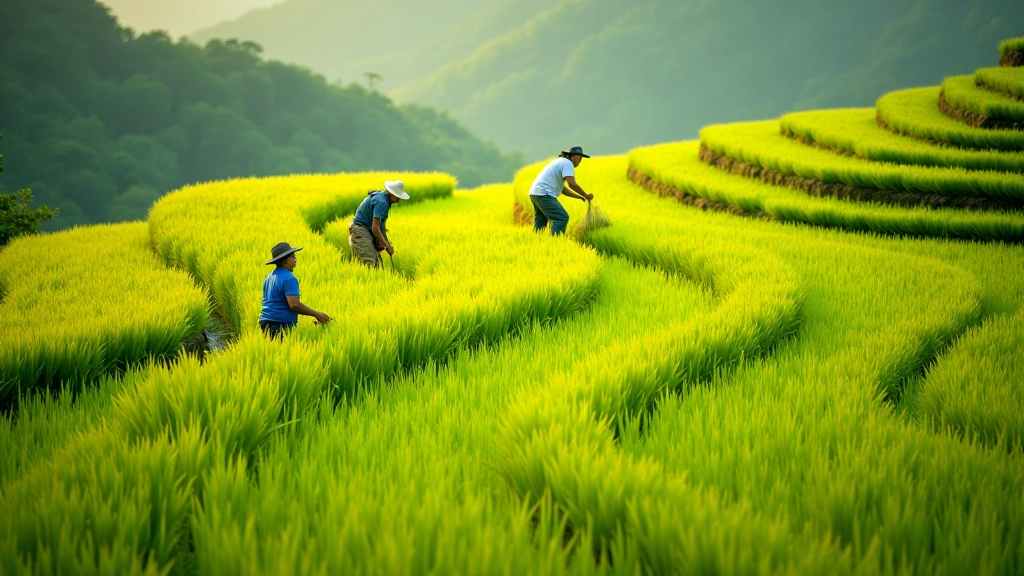
Rice is Malaysia’s most politically sensitive food commodity. As a staple for over 32 million people, the government targets near-complete self-sufficiency — currently sitting around 70-75% domestic production. The gap’s closing because of focused investment in the Muda Agricultural Development Authority (MADA) scheme, the nation’s largest irrigation system covering 106,000 hectares in northern Peninsular Malaysia.
The strategy involves three main elements. First, improved varieties bred for Malaysia’s climate and resistant to local pests and diseases. Second, modernized irrigation infrastructure ensuring water availability year-round — Malaysia gets two growing seasons annually. Third, support for farmers to transition from traditional to mechanized farming. A rice farmer using modern techniques and quality seeds produces about 5-6 tons per hectare, compared to 3-4 tons with traditional methods.
Challenges remain real. Younger Malaysians aren’t entering rice farming — it’s hard work with modest income. The government addresses this through better pricing, crop insurance, and mechanization subsidies. There’s also debate about sustainability: intensive rice farming uses significant water and chemicals. Forward-thinking farmers are exploring organic and integrated pest management systems that reduce chemical dependency while maintaining yields.

Vegetables and Protein Production
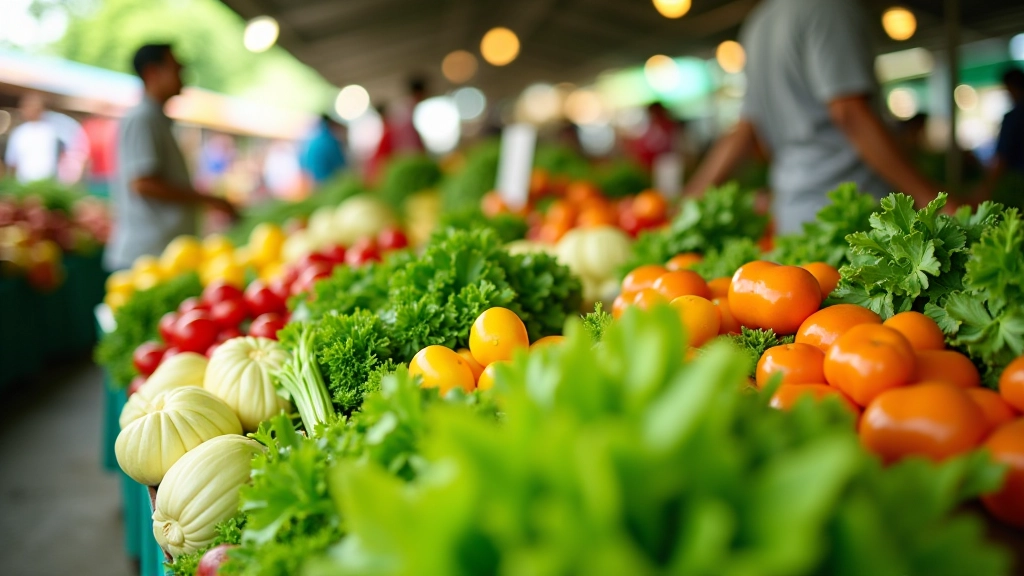
Vegetables and protein sources like chicken, eggs, and fish represent the fastest-growing segment of food security work. Malaysia already produces about 90% of its chicken and 80% of its eggs domestically — relatively strong positions. Vegetables are trickier because Malaysia imports leafy greens and other vegetables from Thailand and China, especially during dry season months.
The response has been dramatic expansion of controlled-environment agriculture. Vertical farms using hydroponics or aquaponics can produce leafy greens in just 30-40 days, independent of weather. Companies like local startup Sustenir Agriculture and international players have built facilities producing lettuce, kangkung, and specialty greens. These aren’t tiny hobbyist operations — they’re commercial farms supplying supermarkets and restaurants. The economics work because high-value crops and year-round production offset higher startup costs.
For fish and seafood, aquaculture expansion targets both freshwater (tilapia, catfish) and coastal farms (grouper, snapper). The challenge here involves balancing production with environmental responsibility — poorly managed farms can damage mangrove ecosystems. Best-practice standards now emphasize sustainable aquaculture certification, integrated rice-fish systems, and ecosystem restoration alongside production targets.
Real Challenges and Practical Solutions
Achieving food security involves navigating climate, economics, and social change simultaneously.
Climate Variability and Weather Extremes
Malaysia’s tropical climate brings unpredictable monsoons, flash floods, and occasional droughts. Farmers can’t rely on rainfall alone. Solution: Investment in irrigation infrastructure, weather-resistant crop varieties, and climate data systems helping farmers make informed planting decisions. Crop insurance schemes protect against total loss during extreme events.
Land Use Competition
Agricultural land gets converted to housing, industry, and commercial development as Malaysia urbanizes. Farmland shrinks every year. Solution: Intensify production on existing land through technology and better practices. Urban agriculture in cities reduces pressure on rural land. Land-use planning now prioritizes agricultural preservation in strategic areas.
Aging Farming Population and Labor Shortage
Young Malaysians migrate to cities for higher-paying jobs. Average age of rice farmers exceeds 55 years in some regions. Solution: Make farming more attractive through mechanization reducing physical labor, better pricing and income stability, youth agri-entrepreneur programs, and skills training for new farming methods like hydroponics and controlled-environment agriculture.
Input Costs and Farmer Income
Seeds, fertilizers, and equipment costs rise constantly, while farm-gate prices don’t always keep pace. Smallholder farmers struggle with margins. Solution: Subsidized input programs for essential items, cooperatives providing bulk purchasing power, direct-to-consumer marketing channels reducing middlemen, and value-added processing allowing farmers to capture more profit per product.
Pest and Disease Management
New pests and crop diseases constantly emerge in tropical climates. Chemical pesticide overuse creates resistance and environmental damage. Solution: Integrated Pest Management (IPM) combining biological controls, cultural practices, and targeted chemical use. Early warning systems through extension services alert farmers to emerging threats. Research focuses on disease-resistant crop varieties.
Market Access and Price Volatility
Smallholder farmers often lack direct market access and get exploited by middlemen. Global commodity prices create uncertainty. Solution: Digital platforms connecting farmers to buyers, contract farming arrangements guaranteeing prices, farmer cooperatives with collective bargaining power, and government price support mechanisms for essential staples like rice.
The Road Ahead: Technology and Sustainability
Malaysia’s food security strategy increasingly embraces technology without abandoning traditional knowledge. Precision agriculture — using drones, sensors, and data analytics — helps farmers optimize water, fertilizer, and pesticide use. It’s not just efficiency; it’s sustainability. A farmer who knows exactly which section of the field needs irrigation uses less water overall.
Blockchain technology is being piloted to track food from farm to table, creating transparency consumers increasingly demand. Artificial intelligence helps predict crop yields, identify pest outbreaks early, and optimize planting patterns. These aren’t science fiction concepts — they’re being deployed on Malaysian farms right now. A rice farmer in Kedah might use an app to access weather data, pest warnings, and market prices before deciding on next season’s crop.
There’s also growing recognition that food security connects to other goals: climate action, rural development, and biodiversity conservation. Modern programs try to achieve multiple outcomes simultaneously. Agroforestry systems combining trees and crops improve food production while sequestering carbon and preserving habitat. Organic farming reduces chemical inputs while sometimes producing premium-priced products. The best solutions don’t sacrifice one goal for another.
Key Takeaways
Food security is strategic. Malaysia’s targeting 60% self-sufficiency in key food categories by 2030 because relying too heavily on imports creates vulnerability.
Technology transforms farming. Vertical farms, precision agriculture, and data-driven decisions are making production more efficient and sustainable.
Farmer support is essential. Mechanization subsidies, training programs, and better market access help farmers increase productivity and income simultaneously.
Multiple solutions, not one answer. Rice needs irrigation and new varieties. Vegetables benefit from controlled-environment farms. Fish production requires sustainability standards. Food security requires diverse, localized approaches.
Sustainability and production aren’t opposed. Modern initiatives increasingly show that sustainable farming — less chemical, better water management, biodiversity — often improves long-term productivity and resilience.
Disclaimer
This article provides educational information about Malaysia’s food security initiatives and agricultural programs. The information reflects publicly available data and policy documents as of March 2026. Food security strategies evolve continuously based on changing circumstances, research findings, and policy updates. For specific details about agricultural programs, subsidies, or technical requirements, consult official sources including the Ministry of Agriculture and Food Security, agricultural extension services, or relevant government agencies. This content isn’t intended as policy advice or farming guidance for specific situations. Individual circumstances vary significantly based on location, crop type, farm size, and market conditions.